For homework, we had to listen to "This I Believe" essays on npr.org. I think the point of this is to learn about how other people's beliefs and how they choose to express them.
This I believe is an essay that listeners of NPR radio submit to the station. These essays are about what guides these people's lives. The three esays that interested me the most were by Joan Towers, Ying Ying Yu, and Joshua Yuchasz.
I was particularly interested in Joan Towers essay because it was about music. I have heard of Joan Towers compositions, but I haven't heard any of them yet. The title of her essay,"Music makes me come alive", rang true to me. In her essay, she talked about how Music is more than just music to her. For her, it's a way of escape, a way to do something significant. She also talked about how it is the deepest form of communication. I agree with her essay. When I started the piano at six, I remember feeling very happy about getting the chance to play an instrument. As I got older, I matured in my playing, and the rewards I could reap from playing the piano got better and better. I use music as a way to escape from my life. With music, you can shut out the world and be in your own. I also feel that music involves communication. To me, the point of music is to be able to enjoy it and share it with other people. In that sense, it is communication. When you play for someone, you are communicating all your emotions and skills. These emotions could run from love to anger. In other words, the possibilities are endless.
Ying Ying Yu's essay was particularly interesting. After reading Alex Y's suggestion to listen to this essay, I decided that I would. Ying Ying Yu imigrated to China when she was in grade school. Her essay talked about fufilling your duty and education. I think that she was trying to convey the message that she is bound to her duty, and that she will fufill it. While listening to her essay, I found out that I am very familiar with her type of thinking. I'm an ABC or American Born Chinese. Since my parents came from Taiwan, they were influenced by Chinese Culture. One extremely important aspect of Chinese culture is Education. Education is extremely important to the Chinese, especially to the students. When I was small, my parents also stressed education. They made sure that I would be able to have an excellent education. Ying Ying talked about fufilling her duty. That train of thought is very Chinese. In a way, I also believe in fufilling one's duty. I especially agreed with her thoughts on not giving up. There were many people who worked hard to provide me with the best education. If I gave it up, it would be very insulting to the people who helped me get to where I am. Her essay gave me an interesting viewpoint on education and how she feels about it.
The last essay was about how people should be appreciated for being different. I agree with Joshua's viewpoint. I myself am different in certain ways. One way I'm different is that I can't stand rap, country, or heavy metal music. I'm infatuated with classical music. Most teens these days can't stand to even think about classical music. They think, " Oh, it's that old fogey music again", or "YUCK!". When I was younger, I was ridiculed for liking classical music. Then again, everyone was immature, and nobody knew how to appreciate differences. It even got to a point where I almost had to act like I didn't like classical music just to fit in. Now that I am older, I see that differences are what make people different from each other. Like Joshua wisely said: "What is all people spoke the same?" Now, I am extremely appreciative of my differences, and I hope that I can express them more in the future!
Monday, January 29, 2007

Sunday, January 28, 2007
Richard Goode: Inspiring Pianist
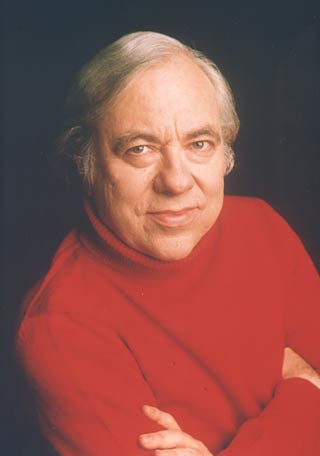 Last night, I had the priviledge of attending a concert that featured Richard Goode at the piano. Most of us have never heard of him, but I would to give an introduction to this amazing pianist.
Richard Goode was one of today's premier pianists. Born in New York, he studied the piano with such luminaries as Elvira Szigeti, Claude Frank, Nadia Reisenberg, and Rudolf Serkin. Ever since then, his career has taken him around the world. He has performed with the world's top orchestras. Some of them include: The Boston Symphony Orchestra, The Chicago Symphony, The Cleveland Orchestra, and the Vienna Symphony. He is particulary noted for his interpretations of Mozart and Beethoven, two of the greatest composers for the piano. If you would like to read more about him, please go to this website.
The program was extensive in my opinion, and it ensured that we as an audience would be able to experience a wide spectrum of music. We heard music by Bach, Mozart, Brahms, and Debussy. Before last night, I had no idea about how Richard Goode was such a great pianist. After hearing the first few notes of the Bach Suite however, I was astounded. The Bach was played with an almost effortless expression. I could hear the melody floating above the undercurrent of the other lines. To experience Bach like this gave me a new perspective on Bach. I am not the a fervent fan of Bach, but his performance gave me a second opinion on Bach's music. Next up was the Mozart. I was highly impressed with the way Goode performed this Rondo in A. Mozart's music is said to be extremely hard to play, due to the fact that you either have to be young and innocent, or you have to be old enough to feign the innocence. This quote rings true, Mozart's music is seen as innocent and almost perfect. Goode showed that actually CAN be enjoyable. I actually enjoyed listening to it, and trust me, I am not the biggest fan of Mozart's music.
Next came the Brahms Fantasien, Op.116. This piece is comprised of seven movements, three capprioco, and four intermezzos. The passion in the capprioco was astounding, the fury, the emotion, it was all there. The intermezzos were not merely "filler" pieces. The movements were movements of sublime beauty. The texture of the music was brought out. There were moments when I felt like I was in another world. (You're probably thinking, "He's such a freak". I know it's weird, but that's how I really felt!) His phrasing also inspired me. I will vow to connect the melodies together and organize my playing!
After the intermission came the set of Debussy's Preludes, Book Two. These twelve preludes are examples of program music, music that evokes actual images or has a "program to it". For example, some of the titles included: "Fireworks", "Mists", and "Canopy". The suggestive images came to life during this performance. During fireworks, the glissandos sprang from the keys with vigor and liveliness. Mists was very ambigious indeed, I felt as if I was searching my way through a mysterious land with weird key changes and ever so soft pianissimos.
The evening was one that I will cherish for a long time to come. Goode's playing gave me a new perspective on certain composers, and it also showed me the true potentials of the piano.
If you've gotten through all of this, I am really quite amazed! Thanks for your time, hope that reading this post was worth it!
Thursday, January 25, 2007
The Water Buffalo Story
In class, we were asked to watch the Water Buffalo Story which was posted by Robert Thompson, a violinist living in Yunnan Province, China. It was a heartwarming story about how some Americans donated a water buffalo to a family. This family had endured many hardships, and the gift was overwhelming to them. I've been asked to juxtapose this video and the Singer Essay.
Let me start by saying that the video and the essay both dealt with the problem of world hunger, in different ways. The video showed us how the buffalo would be able to solve their poverty problem for at least a year. The essay proposed a solution to World hunger, one I did not agree with.
The video actually showed us how world poverty can be dealt with. There was nothing hypothetical about it, not just talking the talk. Robert Thomspon actually "walked the walk". The family's reaction was absolutely amazing. Being able to see how one water buffalo could lift a family's spirits was a rare sight. Singer's essay, however, seemed to be more aloof. Not only was the tone of the essay argumentative and distant, but it didn't have the emotional impact of the video. The essay was more complex, but doesn't mean that it is more plausible. In this case, simplicity wins.
I also have some questions to post about the Singer Essay:
Is there really a solution to World Hunger?
Does Brian Singer actually care about this problem?
Let me start by saying that the video and the essay both dealt with the problem of world hunger, in different ways. The video showed us how the buffalo would be able to solve their poverty problem for at least a year. The essay proposed a solution to World hunger, one I did not agree with.
The video actually showed us how world poverty can be dealt with. There was nothing hypothetical about it, not just talking the talk. Robert Thomspon actually "walked the walk". The family's reaction was absolutely amazing. Being able to see how one water buffalo could lift a family's spirits was a rare sight. Singer's essay, however, seemed to be more aloof. Not only was the tone of the essay argumentative and distant, but it didn't have the emotional impact of the video. The essay was more complex, but doesn't mean that it is more plausible. In this case, simplicity wins.
I also have some questions to post about the Singer Essay:
Is there really a solution to World Hunger?
Does Brian Singer actually care about this problem?
Tuesday, January 23, 2007
Response to "The Singer Solution to World Poverty"
Here's my response to this essay. Before I start, I'd like to give some background on the author. Peter Singer published this essay in The New York Times Sunday Magazine on September 5, 1999.
I feel that the Singer Solution to World Poverty was a very interesting essay. From the very beginning, Peter Singer made his view on the subject extremely clear, it was so articulated that it was almost forced. Although he backed up his argument with some valid points, I am not convinced by this solution. From what I gathered after reading this essay, Singer apparently wants every American household to donate all their money that would normally be used for luxuries. At first glance, this solution seemed to be a valid solution to the problem. After thinking about this for a while, my view on the solution changed. It is true that the only way we can live truly moral lives is to give as much as we can. However, I don't think that the solution to the problem is to give away all the extra money we have.
The solution has many flaws, I'm going to address the one overarching flaw.
1. This solution is simply unrealistic. Sure, world poverty might be temporarily stalled with all the extra money. Honestly though, would this happen in real life? Most people would probably disregard this solution and act like it never existed. Why though? There is one quote in the essay that ties in with this. "Now, evolutionary psychologists tell us that human nature just isn't sufficiently altruistic to make it plausible that many people will sacrifice so much for strangers." Exactly. If all the money went to help poverty stricken people, what would we have? This sounds selfish, but we have to take care of ourselves too. The money for necessities would keep us nourished, housed, etc, but our economy would collapse. People wouldn't have any money to spend on items that aren't necessities. (Imagine no one strolling through Ala Moana anymore!) If this happened, our lives would be directly affected. If the economy suffers, we suffer. Many people would be unemployed. Our country would cease to be the economic superpower it is today.
Let me apply example to Hawaii. If the Japanese decided to try this solution out, I would say that there wouldn't be NEARLY as many tourists in Hawaii. Our thriving economy would grind to a halt. Our state probably wouldn't be able to handle the loss of revenue. The people in Hawaii might start to suffer. This sounds weird, but in trying to end world poverty, we would be creating poverty here at home. This beckons the question, is there really a solution to world poverty? There are probably thousands upon thousands of "solutions" to it, but would they actually work? This Singer solution would never work because in trying to end world poverty, there would be the potential to create even more world poverty. It would resemble a vicious cycle, so to speak.
Even donating money might not solve the problem. Donating money only feeds people. We are not attacking the root of the problem. This is sort of like pulling weeds, except that you don't completely remove the roots. The weeds will inevitably spring up once again, and the whole process will start all over again. As for attacking the roots of the problem, I don't see how we can truly eradicate the vast majority of them. It seems too enormous of an obstacle to be effectively dealt with.
So in conclusion, I think that I've reached quite a depressing conclusion. As far as I can see, there isn't a plausible solution for World Poverty.
I feel that the Singer Solution to World Poverty was a very interesting essay. From the very beginning, Peter Singer made his view on the subject extremely clear, it was so articulated that it was almost forced. Although he backed up his argument with some valid points, I am not convinced by this solution. From what I gathered after reading this essay, Singer apparently wants every American household to donate all their money that would normally be used for luxuries. At first glance, this solution seemed to be a valid solution to the problem. After thinking about this for a while, my view on the solution changed. It is true that the only way we can live truly moral lives is to give as much as we can. However, I don't think that the solution to the problem is to give away all the extra money we have.
The solution has many flaws, I'm going to address the one overarching flaw.
1. This solution is simply unrealistic. Sure, world poverty might be temporarily stalled with all the extra money. Honestly though, would this happen in real life? Most people would probably disregard this solution and act like it never existed. Why though? There is one quote in the essay that ties in with this. "Now, evolutionary psychologists tell us that human nature just isn't sufficiently altruistic to make it plausible that many people will sacrifice so much for strangers." Exactly. If all the money went to help poverty stricken people, what would we have? This sounds selfish, but we have to take care of ourselves too. The money for necessities would keep us nourished, housed, etc, but our economy would collapse. People wouldn't have any money to spend on items that aren't necessities. (Imagine no one strolling through Ala Moana anymore!) If this happened, our lives would be directly affected. If the economy suffers, we suffer. Many people would be unemployed. Our country would cease to be the economic superpower it is today.
Let me apply example to Hawaii. If the Japanese decided to try this solution out, I would say that there wouldn't be NEARLY as many tourists in Hawaii. Our thriving economy would grind to a halt. Our state probably wouldn't be able to handle the loss of revenue. The people in Hawaii might start to suffer. This sounds weird, but in trying to end world poverty, we would be creating poverty here at home. This beckons the question, is there really a solution to world poverty? There are probably thousands upon thousands of "solutions" to it, but would they actually work? This Singer solution would never work because in trying to end world poverty, there would be the potential to create even more world poverty. It would resemble a vicious cycle, so to speak.
Even donating money might not solve the problem. Donating money only feeds people. We are not attacking the root of the problem. This is sort of like pulling weeds, except that you don't completely remove the roots. The weeds will inevitably spring up once again, and the whole process will start all over again. As for attacking the roots of the problem, I don't see how we can truly eradicate the vast majority of them. It seems too enormous of an obstacle to be effectively dealt with.
So in conclusion, I think that I've reached quite a depressing conclusion. As far as I can see, there isn't a plausible solution for World Poverty.
Sunday, January 21, 2007
Nice to meet you!
Hi! My name's Eric, and I'm a sophomore. This commonplace book is going to be a place where I try to make some sense out of this complicated world. At some point in our lives, we have those moments when we try to answer life's toughest questions. Most of the time, the answers will elude our grasp. I believe, however, that every time we try to answer these questions, we are slowly and inevitably moving towards a greater understanding of both these questions and ourselves. I'll try my best to explore these questions, knowing that I might never discover the answers.
Well, enough about that. Let me introduce myself more thoroughly! I was born and raised in Honolulu, Hawaii. I am a second generation Chinese, my parents immigrated to America in their youth. I have two favorite subjects: Math and Chinese. I enjoy math because I like working with numbers. Chinese allows me to learn more about my heritage through the language. Outside of school, I play the piano and the violin. I started the piano when I was six, and I started the violin when I was ten. Playing these instruments has led me to have a passion for music, mainly classical music. A few of my favorite composers include Haydn, Beethoven, Tchaikovsky, and Rachmaninoff. Besides classical, I also enjoy listening to the Soft Rock genre.
Thanks for Reading!
Eric
Well, enough about that. Let me introduce myself more thoroughly! I was born and raised in Honolulu, Hawaii. I am a second generation Chinese, my parents immigrated to America in their youth. I have two favorite subjects: Math and Chinese. I enjoy math because I like working with numbers. Chinese allows me to learn more about my heritage through the language. Outside of school, I play the piano and the violin. I started the piano when I was six, and I started the violin when I was ten. Playing these instruments has led me to have a passion for music, mainly classical music. A few of my favorite composers include Haydn, Beethoven, Tchaikovsky, and Rachmaninoff. Besides classical, I also enjoy listening to the Soft Rock genre.
Thanks for Reading!
Eric
Subscribe to:
Posts (Atom)
