Well, we had a discussion with Mr. Kandell, and I am going to try to post my thoughts. However, since the details are sort of foggy, I think that I will discuss my personal feelings about the novel itself.
The Poisonwood Bible is definitely a book that is worth reading. Even though I thought that the book was difficult at times, the end result was extremely rewarding. The book can seem intimidating because it is so fat, but it is worth reading.
The one aspect I enjoyed the most about the book was the different view points that were presented to us, the readers. Barbara Kingsolver used a special writing technique. She told the story from the viewpoints of all five Price women. By doing this, we were able to see each individual through their own eyes, and through the eyes of the other people. In other books, we usually can only see everything from one person's point of view. Being able to through the eyes of everyone allowed me to see how characters evolved throughout the book. I also enjoyed the span of the book. We were allowed to see what happened to the family outside of Kilanga. This helped me to understand how the people evolved even after the "main" chunk of the story.
I enjoyed reading the book, and I would recommend it to anyone.
Monday, May 14, 2007

Poisonwood Post: Bel and the Serpent
For this book, I've decided to act as a moderator.
1. How does the different reactions of the family members to Ruth May's death show their true selves?
2. Does the death prompt any serious character changes in the novel?
3. Who plants the snake, and why does he do it?
4. How does the biblical story of Bel and the Serpent tie into the book Bel and the Serpent?
5. Does the death of Ruth May have a symbolic meaning to it?
1. How does the different reactions of the family members to Ruth May's death show their true selves?
2. Does the death prompt any serious character changes in the novel?
3. Who plants the snake, and why does he do it?
4. How does the biblical story of Bel and the Serpent tie into the book Bel and the Serpent?
5. Does the death of Ruth May have a symbolic meaning to it?
Tuesday, April 17, 2007
Quintessential Post



In class, we were asked to do a quintessential post of our choice. Before this class, I didn't even know what the exact meaning of quintessential was! The exact definition is "the most perfect embodiment of something". The definition we went with in class was "something that has the it factor, or the x factor". When you actually give the topic a thought, it's really intriguing to think about the it factor. What makes something quintessential? I personally think that you can't exactly pinpoint the x factor. When it's there, it's there, and there will be no need for a further explantion.
My quintessential thing is sort of weird, but I'll give it a try. =())
The Quintessential Bleach: CLOROX
When you gotta get rid of those stains, which bleach instantly comes to mind? That's right, clorox. Clorox is the quintessential bleach. It has become a household name in America. It doesn't only clean clothes, it can even clean the bathtub! The many uses of clorox are truly astounding. Not suprisingly, clorox has even become a verb in some cases. "Spilled the grape juice on your brand new shirt? Just clorox it!" And to think, there are still more clorox products out there. How can the "clorox bleach pen" be ignored? You can clorox, and you can clorox the exacts spots that you want to clorox!!! Plus, it kills 99.9% of viruses, bacteria, and mold. And, it comes in different scents, like fresh meadow and mountain fresh.
What makes clorox the quintessential bleach? I think that we can agree that most people immediately associate clorox with bleach. I mean, it just feels natural. Would you immediately think of "White King"? I don't think so.
With all these uses, clorox, in my opinion is the quintessential bleach. Now would you excuse me, I have to go and "clorox" my clothes.
Monday, April 9, 2007
Mozart's Symphony No. 41: Evidence of a Genius at Work

This weekend, while enjoying what is apparently the last holiday of the year, I had a chance to sit back and relax to some of my favorite classical music. It had been quite a while since I listened to Mozart, so I decided to listen to his Symphony no. 41.
I WAS BLOWN AWAY.
Before I head into the details, here's some background info on Mozart. Mozart was born in 1756, and he died in 1791. He lived during the classical era, an era characterized by homophony. Famous composers that lived during this era include Haydn, Mozart, and Beethoven. Mozart is thought to be the greatest classical music prodigy of all time. It is said that after listening to a lengthy symphony, he could write down every single note that was played throughout the piece. Considering that a symphony can have more that 10 parts, this is nothing short of a miracle. Throughout his life, he proved to be a prolific composer, composing over 600 pieces.
In 1788, Mozart wrote three symphonies over the course of a few weeks. These three symphonies, No. 39, 40, and 41, were his last symphonies. Symphony No. 41, set in the key of C major, is his largest, and in the opinions of many (including me), his greatest.
What makes this symphony so brilliant? Mozart had a knack for writing beautiful and infectious melodies, and I am not exaggerating one bit. Ever heard of Eine Kleine Nachtmusik?
While the entire symphony is nothing short of brilliant, I would like to call attention to the last mvt., the molto allegro.
Mozart's genuis is truly showcased in this mvt. The main theme at first glance is simple enough. C, D, F, E. As the piece progresses, this simple theme is developed into more complex themes. This mvt. has been referred to as being the greatest example of development in music. Right before the ending of the mvt. there is a special fugato section. A fugue is a compositional technique that uses many different themes at the same time, at least in this symphony. The mvt. has a total of five themes, and in the fugato, they are all combined. It sounds weird, but the themes magically fit each other like a glove. It itsn't chaotic at all! This fugato led Sir George Grove to say that "it is for the finale that Mozart has reserved all the resources of his science, and all the power, which no one seems to have possessed to the same degree with himself, of concealing that science, and making it the vehicle for music as pleasing as it is learned. Nowhere has he achieved more." Of the piece as a whole, he wrote that "It is the greatest orchestral work of the world which preceded the French Revolution."(http://en.wikipedia.org/wiki/Symphony_No._41).
These two pictures illustrate the themes and the fugato.


I'm not sure where you can listen to it for free on the internet, but if you are really interested, go buy a CD!
I recommend: Mozart Symphonies Nos. 39, 40, 41 "Jupiter". Conductor-Karl Bohm, and the Berlin Philharmonic. This is a great CD!!!
SAT Practice Essay #2
In class, we did another timed SAT essay. This time the topic had to with whether or not people put too much emphasis on practical skills.
If we compare today’s society with the society of the past, there are many marked differences. With the advent of technology, our society has reached new heights in many aspects of life, such as healthcare and transportation. However, one of the largest differences between the societies is how people live their lives. Today, the goal of most people in society is to make a good living. Technology has allowed us to live luxurious lives, as long as you have money. How does one obtain a “good living”? Many people believe a good job is key. At the bottom of all this are practical skills. Since people see practical skills as rungs on the ladder to success, there is too much emphasis placed on these skills.
People place too much emphasis on practical skills, and it has an enormous impact on our society. In schools, there is a phenomenon that surrounds grades. Everyone just has to get stellar grades! I know of some people who will haggle with the teacher for one or two points. This is an example of putting too much emphasis on practical skills. If one attains excellent grades and goes off to an elite university, they will be able to have a “good life”. These students, unfortunately, don’t get as much out of the overall learning experience. The person who haggles for grades would be resentful of a certain topic that he doesn’t understand. For this person, it is not about learning for learning’s sake, but about the future.
This kind of thinking also impacts our society as a whole. Often times, emphasizing practical skills discourages deep thought or any type of philosophy. Philosophy is not regarded with the same respect it had a couple of centuries ago. Nowadays, people will study practical topics like law, engineering, or medicine. While this enables individuals to obtain a good lifestyle, our society suffers as a whole. If Einstein was set on living a good lifestyle, what would our world be like? There might not be a theory of relativity. Einstein used his formidable intellect to enhance the knowledge of society. By applying his example to modern society, we can see that there are probably many great minds that are being lost to “practical occupations”. Many people emphasize practical skills and occupations, and as a result, our society suffers.
This issue however, has two sides. While I firmly believe that too much emphasis is placed on these skills, there is a reasonable argument for the other point of view. Practical skills are what enable one to survive in today’s world. We can’t ignore the fact that money is what allows for one’s well being. If one only learned every skill that was not practical, how would he/she make a living? Some of these people might end up not contributing anything to our society at all. Therefore, it would be better to emphasize practical skills. This would probably be part of their argument.
People place too much emphasis on practical skills. By only emphasizing these skills, our society does not advance intellectually as a whole. This issue is divided, but I firmly believe that too much emphasis is placed on these skills.
If we compare today’s society with the society of the past, there are many marked differences. With the advent of technology, our society has reached new heights in many aspects of life, such as healthcare and transportation. However, one of the largest differences between the societies is how people live their lives. Today, the goal of most people in society is to make a good living. Technology has allowed us to live luxurious lives, as long as you have money. How does one obtain a “good living”? Many people believe a good job is key. At the bottom of all this are practical skills. Since people see practical skills as rungs on the ladder to success, there is too much emphasis placed on these skills.
People place too much emphasis on practical skills, and it has an enormous impact on our society. In schools, there is a phenomenon that surrounds grades. Everyone just has to get stellar grades! I know of some people who will haggle with the teacher for one or two points. This is an example of putting too much emphasis on practical skills. If one attains excellent grades and goes off to an elite university, they will be able to have a “good life”. These students, unfortunately, don’t get as much out of the overall learning experience. The person who haggles for grades would be resentful of a certain topic that he doesn’t understand. For this person, it is not about learning for learning’s sake, but about the future.
This kind of thinking also impacts our society as a whole. Often times, emphasizing practical skills discourages deep thought or any type of philosophy. Philosophy is not regarded with the same respect it had a couple of centuries ago. Nowadays, people will study practical topics like law, engineering, or medicine. While this enables individuals to obtain a good lifestyle, our society suffers as a whole. If Einstein was set on living a good lifestyle, what would our world be like? There might not be a theory of relativity. Einstein used his formidable intellect to enhance the knowledge of society. By applying his example to modern society, we can see that there are probably many great minds that are being lost to “practical occupations”. Many people emphasize practical skills and occupations, and as a result, our society suffers.
This issue however, has two sides. While I firmly believe that too much emphasis is placed on these skills, there is a reasonable argument for the other point of view. Practical skills are what enable one to survive in today’s world. We can’t ignore the fact that money is what allows for one’s well being. If one only learned every skill that was not practical, how would he/she make a living? Some of these people might end up not contributing anything to our society at all. Therefore, it would be better to emphasize practical skills. This would probably be part of their argument.
People place too much emphasis on practical skills. By only emphasizing these skills, our society does not advance intellectually as a whole. This issue is divided, but I firmly believe that too much emphasis is placed on these skills.
Poisonwood Bible: Critical response to a passage
As I make my way throughout the book, the characters in the Poisonwood Bible grow and change beyond what I could ever expect. I think that one of the most interesting aspects of any book is how the personality of the character is shown through his/her words. While I was reading "The Judges", one passage stood out.
"Tata Jesus is Bangala" declares the Reverend every Sunday at the end of his sermon. More and more, mistrusting his interpreters, he tries to speak in Kikongo. He throws back his head and shouts these words to the sky, while his lambs sit scratching themselves in wonder. Bangala means something precious and dear. But the way he pronounces it, it means the poisonwood tree. Praise the Lord, hallelujah, my friends! for Jesus will make you itch like nobody's business."
In class, we discussed how Father does not truly immerse himself in the culture of the Congo. Unlike Brother Fowles, who learned to accept the culture while spreading his own, Father stubbornly refuses to learn about the culture. I think this passage gets one very important message across to the reader. Father is truly an outsider to these people. He tries to incorporate Kikongo into his sermon, but he ends up mutilating the language. What's worse, he doesn't even seem to notice that he is pronouncing the word incorrectly. In my opinion, this is Father's biggest mistake. He fails in every aspect where Brother Fowles succeeded. The people don't like him because he only acknowledges his own beliefs. This passage can show us how ignorant Father really is.
"Tata Jesus is Bangala" declares the Reverend every Sunday at the end of his sermon. More and more, mistrusting his interpreters, he tries to speak in Kikongo. He throws back his head and shouts these words to the sky, while his lambs sit scratching themselves in wonder. Bangala means something precious and dear. But the way he pronounces it, it means the poisonwood tree. Praise the Lord, hallelujah, my friends! for Jesus will make you itch like nobody's business."
In class, we discussed how Father does not truly immerse himself in the culture of the Congo. Unlike Brother Fowles, who learned to accept the culture while spreading his own, Father stubbornly refuses to learn about the culture. I think this passage gets one very important message across to the reader. Father is truly an outsider to these people. He tries to incorporate Kikongo into his sermon, but he ends up mutilating the language. What's worse, he doesn't even seem to notice that he is pronouncing the word incorrectly. In my opinion, this is Father's biggest mistake. He fails in every aspect where Brother Fowles succeeded. The people don't like him because he only acknowledges his own beliefs. This passage can show us how ignorant Father really is.
Thursday, March 29, 2007
The Poisonwood Bible and The Mosquito Coast
Our teacher decided that it would be a good idea to watch a movie that relates to the Poisonwood Bible. Fast Forward, and we just finished "The Mosquito Coast". I have to say that the similarities were striking. Both families are led by stubborn and forceful fathers, who have agendas that they must see accomplished. Father Price tries to convert the people in the Congo to Christianity, while the father in "The Mosquito Coast" tries to bring his inventions to the people in Africa. The wives in both the book and movie silently object, but can't do anything about the situation. The plot is driven by the fathers in PWB and "The Mosquito Coast". It deals with fathers who lead their families to unknown areas just to carry out their plans. It ends up in disaster(Ruth May's death, death of Allie Fox in "Mosquito Coast").
There is one glaring difference, however. It is the absence of religion in "The Mosquito Coast". Religion plays an extremely important role in PWB, because Father is a reverend who tries to convert everyone to Christianity. In the movie, Allie Fox is an inventor, and he tries to share his inventions with people who don't live in civilization.
The book and movie were extremely similar, and I think that watching the movie helped me to picture what the PWB might be like if it were to be acted out.
There is one glaring difference, however. It is the absence of religion in "The Mosquito Coast". Religion plays an extremely important role in PWB, because Father is a reverend who tries to convert everyone to Christianity. In the movie, Allie Fox is an inventor, and he tries to share his inventions with people who don't live in civilization.
The book and movie were extremely similar, and I think that watching the movie helped me to picture what the PWB might be like if it were to be acted out.
Poisonwood Bible Lit Circle "Judges"
For this book, I decided that I want to try the role of New Critic. This is because I wanted to find the key passages that could help me understand the book and more importantly, the characters better.
In Judges, the Price household is challenged by many obstacles. Some of them include the invasion on the ants, Ruth May's illness, and Tata Ndu's proposal for marriage. These obstacles truly make an impact on the characters, and we can see that they are slowly being weathered down, both physically and mentally. I am going to point out the passages that seemed significant because they pointed to changes in the characters.
1) "That was the last I would ever hear...hard shoe leather"(196)
2) "The Reverend seemed unconcerened about this. He forged...As if she did not know."(217)
3) "Poor tyrannical Rachel...scheme."(222)
4) "Shut up, damn it...threat at all"(242)
5) "I was shocked...of the bargain."(243)
6) "Oh! I suddenly...them."(249)
7) "Rachel went...pay."(266)
8) "Mother stood looking...Congo" (267)
9) "Well, t turns out...ball."(268)
10) "Tata Jesus is Bangala...nobody's business." (276)
In Judges, the Price household is challenged by many obstacles. Some of them include the invasion on the ants, Ruth May's illness, and Tata Ndu's proposal for marriage. These obstacles truly make an impact on the characters, and we can see that they are slowly being weathered down, both physically and mentally. I am going to point out the passages that seemed significant because they pointed to changes in the characters.
1) "That was the last I would ever hear...hard shoe leather"(196)
2) "The Reverend seemed unconcerened about this. He forged...As if she did not know."(217)
3) "Poor tyrannical Rachel...scheme."(222)
4) "Shut up, damn it...threat at all"(242)
5) "I was shocked...of the bargain."(243)
6) "Oh! I suddenly...them."(249)
7) "Rachel went...pay."(266)
8) "Mother stood looking...Congo" (267)
9) "Well, t turns out...ball."(268)
10) "Tata Jesus is Bangala...nobody's business." (276)
Friday, March 23, 2007
A poem for the night
 With darkness comes light
apprehension fades into assurance
as the final rays of light dissipate
pain and suffering evanesce into gentle healing and requiescence
darkness illuminates the path to a world that is truly and utterly free
Free from the constraints of an apathetic society
Alas, this world was never meant to be
only existing for a fleeting moment
assurance becomes apprehension
and with the coming of the light comes eternal darkness
(This was written at 1:25 in the morning, and I had just watched Star Wars Episode III with a friend while eating Kimchee Fried Rice. I am not insinuating anything about Kimchee. I also ate some popcorn and oranges. Go figure.)
Tuesday, March 13, 2007
Poisonwood Bible Lit 8's "Revelation"
Well, since my job was lexicographer, I decided to look up words that I thought were confusing.
vexed:To be irritated or agitated.
precipice: A steep plane/ cliff.
sustenance: means of sustaining life; nourishment.
manioc: A certain type of tree root.
enamel: any of various varnishes, paints, coatings, etc., drying to a hard, glossy finish
I haven't read through the entire book yet, so I don't have many words yet. They will come soon!
vexed:To be irritated or agitated.
precipice: A steep plane/ cliff.
sustenance: means of sustaining life; nourishment.
manioc: A certain type of tree root.
enamel: any of various varnishes, paints, coatings, etc., drying to a hard, glossy finish
I haven't read through the entire book yet, so I don't have many words yet. They will come soon!
Monday, March 12, 2007
Defining Moments: A look at the turning points in The Poisonwood Bible
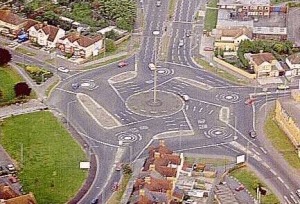
In class the other day, we discuseed "defining moments", or "turning points". I found this activity pretty interesting because we could take the book and condense it into certain parts or passages that were really significant. I think doing this activity was like killing two birds with one stone. We learn about the significant passages in the book, and through these passages, we can learn about the characters themselves! At least I thought that it helped me to learn about the characters.
Our group came up with two defining moments. They take place during the books Genesis and Revelations. The two passages are actually related through one character: Father. On Pg. 79, Mama Tataba suddenly leaves the Price household. On her way out, she yells at father and gives him a mean scolding. "Naturally it shocked us half to death to hear somebody caterwauling at Father this way." What's so significant about this passage? I think that the mere fact that someone is yelling at Father seems very important. From the beginning of the book, Father was seen as someone who was almighty and powerful. That is, of course, from the perspective of the women of the Price family. We don't know what Father is thinking, but we can see that Father might not be as powerful or as mighty as he looks. The main significance here is that Father is being challenged for once. He is not the dominant person in this instance. This idea might be very important later on.
The second passage is in Revelations. This situation is similar, but in a certain way, it is different. Ruth May broke her arm, and her parents took her to the hospital. While they are there, father and the doctor exchange a few words. This exchange is not friendly at all, and it reveals some more information about Father. "Now, Reverend, this civilization the Belgians and Americans brought, what should that be?" Father said, "Why, the roads! Railroads..."(121). Even though this situation is similar to what happened with Mama Tataba, it goes a step further. The doctor obviously is indifferent to Christianity in general. This is made clear when he talks back to father. In the quote, we can see that the doctor is not just question Father, he is questioning the Belgians and Americans. In this way he is challenging Father to the highest degree. He questions Father's work and his beliefs. I believe that the doctor is the only character to do this so far. It's a turning point because father is shown to not be so powerful as he seems.
This discussion really made me more interested in the events of the book. I'll be sure to keep a watch out for more passages like these!
A Walk through the eyes of Leah Price

In class, we decided to walk around the campus. This sounds boring, right? Well, throughout this walk, we were told to look at our school through the eyes of a certain character from The Poisonwood Bible. I think that this exercise proved to be an effective way of learning about the main characters. It's different from just analyzing the character in class.
Lord, what a sight this is. Father has decided to move us from Kilanga all the way to Honolulu. Our new school is this place, well God knows that I can't pronounce the name. Rachel is complaining again about how hot this place is. She never really understood how to appreciate God's natural beauty. As for me, I cannot begin to express what I am feeling. The grass is glistening with morning dew. The birds are flying around and singing melodious songs. This is truly God's Kingdom in its pure, unenlightened glory. I find it hard to believe, but the gardens around this campus are even more glorious than our garden back at home. I'd like to learn how they grew such bountiful gardens.
As for the students here, I am still dumbfounded. Father always says that women should cover themselves in the presence of God, who is always looking. Father would say that these girls are sinners and they will burn in Hell. If they were in my place, father would give them the Verse twenty times. The thought of the Verse even makes me feel uncomfortable! Father will probably take it upon himself to save them from their sins. He will bring salvation into the dark.
Monday, March 5, 2007
Poisonwood Bible Lit Circle Post 2
As a moderator, I came up with a few questions that I thought were important.
1. What role does father play in each of the girl's lives?
2. Do the essential questions also play a role in the book? (On Pg.9, the questions "How do we live with it?" was asked).
3. When Father asks about who taught Methuselah to say Damn, why do the girls immediately protect their mother? Would Rachel actually be willing to take the blame?
4. What are your thoughts on Nathan Price? Since he is not given a voice in the book, what are your inferences on him?
5. There has only been one reference to Poisonwood so far. Does this mention have any significance? Father's hand developes a rash because of the sap of the poisonwood.
6. Does Father letting Methuselah go have any significance?
1. What role does father play in each of the girl's lives?
2. Do the essential questions also play a role in the book? (On Pg.9, the questions "How do we live with it?" was asked).
3. When Father asks about who taught Methuselah to say Damn, why do the girls immediately protect their mother? Would Rachel actually be willing to take the blame?
4. What are your thoughts on Nathan Price? Since he is not given a voice in the book, what are your inferences on him?
5. There has only been one reference to Poisonwood so far. Does this mention have any significance? Father's hand developes a rash because of the sap of the poisonwood.
6. Does Father letting Methuselah go have any significance?
What was I doing this Saturday?

I decided to edit this post to make it more concise.
My Saturday morning was spent at Roosevelt HIgh School. Why would I be there in the first place? Well, I was timekeeping for the debate tournament. This was also for extra credit, so that was another reason I was there. At first, the thought of listening to the same debate over and over didn't seem too appealing. I was proven wrong.
The first debate was a policy debate. The topic was: The U.S Government should establish a policy which increases the number of people in one or more of the following national services: Americorps, Medicorps, Learn and Serve America, and other national service programs. This was a very interesting debate. The first debate talked about how whether funding for Medicorps should increase or decrease. Both teams have interesting viewpoints. While I was listening, I actually think that I learned about speaking in general. I know, it sounds like a far fetch, but listening to these speakers improved my speaking skills. People have told me that I mumble. I didn't think twice about this because it didn't seem to be very important. The debate changed my view. When people mumble, it is extremely annoying. I wouldn't want people to be annoyed with me!
The second debate was better than the first one. The speakers spoke in a fluid fashion, and they were easy to understand. I actually enjoyed listening to this debate. Both teams were prepared, and they were confident. Their viewpoints were very different, but they made sense. I think that the largest difference between the debates was that the debaters in the second team knew what they were doing. You should always be well prepared.
The third debate was, in a word, great. The debaters took the art of debate to the next level by successfully attacking their opponents points with evidence and logical thinking. The debaters showed their skills as tacticians. Listening to an excellent debate is a real treat!
When I arrived at Roosevelt High School, I was expecting an extremely boring morning. However, I left with a deep appreciation for the art of debate.
My Saturday was spent at Roosevelt HIgh School. Why would I be there in the first place? Well, I was timekeeping for the debate tournament. This was also for extra credit, so that was another reason I was there. At first, I thought that it would be really boring, but I was proven otherwise.
The first debate was a policy debate. The topic was: The U.S Governement should establish a policy which increases the number of people in one or more of the following national services: Americorps, Medicorps, Learn and Serve America, and other national service program. This was a very interesting debate. The first debate talked about how whether funding for Medicorps should increase or decrease. I have to say that I found their viewpoints to be very interesting. While I was listening, I actually think that I learned about how to speak in public. I know, it sounds like a far fetch, but listening to these speakers improved my speaking skills. i learned that I shouldn't mumble. It is very annoying. Secondly, I should always enunciate. it is extremely annoying to listen to someone who does not enunciate. I also learned that I should be well prepared.
The second debate was better than the first one. The speakers spoke in a fluid fashion, and it was easy to understand. I actually enjoyed listening to this debate. Both teams were prepared, and they were confident. Their viewpoints were very different, but they made sense. I even sided with one of the teams!
The last debate was even better than the previous two.
The Saturday was a great way to learn about speaking skills. I look forward to going next time!
Thursday, March 1, 2007
Literature Circle meeting #1
So far, we have red up to Rachel in "Genesis". Sam, our lexicographer, looked up very interesting words, and this helped to further our understanding of the book so far. We decided to focus upon some of the larger questions so far. one shrewd observation made was that on Pg. 9 of Genesis, the question: "How are we supposed to live with it?" is asked. Our group wondered if this question would have more significance later on in the book. This relates to us because this is basically one of our essential questions. How do we live in this world? Maybe Poisonwood Bible will give us the answer, or at least the characters answers. This could help us answer our own essential questions. After that we talked about the direction we were heading, and we finished our meeting.
Wednesday, February 28, 2007
SAT essays: My thoughts and views

I think that the SAT essays aren't a very good way of measuring how well one can write. Even though the essay does test how well you can organize and think within a certain period of time, it just doesn't seem to be a great method of evaluating writing.
When I was writing this essay, I felt as though I was locked in a fierce battle with time. It seemed that I was just churning out what was on the top of my head. Even though I finished on time, I felt as though I was just churning out ideas that were on the top of my head. If I had been given more time, I am sure I could have put my writing skills to better use. To me, this test doesn't reflect my best writing. Given more time, I might have had the chance to write a truly well rounded essay, or one that at least is well thought out and not rushed. The SAT essay simply does not allow for this to happen.
Then again, I can't be too harsh on the SAT people. I mean, it's understandable that they want to have a standardized way to test essay writing; After all, it is a vital skill. it's just that the time limit is extremely imposing, it adds pressure and anxiety to a process that should be thought provoking and well thought out. I would suggest a better way, but I'm coming to a blank. Here's a question: What would be a better way to test the essay skills on a standardized test? There has to be a better way. Judging the reactions of my peers, it seems that they agree. Who knows, maybe this is the fairest way to do it.
The scoring of the essays seem very typical. Nothing really stands out about it. I don't have any particular like or dislike of it.
I guess I'll have to learn to live with them!
Monday, February 26, 2007
SAT practice essay
*This essay was written in a period of 25 minutes. There was a time limit, and we had no knowledge of the topic beforehand.
The media plays an extremely important role in our lives today. No matter how we try to form our own views and opinions, the media manages to subconsciously influence us. Does this influence have an effect on us humans? I believe that the media does influence what is important to us.
The television is one of the strongest tools that the media can use to influence us. TV's are present in almost every corner of the world. In essence, it has become for many the center of entertainment. Since the TV plays such an important role in our lives, it is impossible for it not to influence us. For example, take the topic of beauty. A popular TV show called Dr. 90210 chronicles the lives of plastic surgeons. Sounds harmless? It isn't. The show features many women who wish to enhance themselves in terms of beauty. Therefore, they turn to plastic surgeons. It is a fact that many women nowadays wish to make themselves more beautiful. Shows like Dr. 90210 influence these women to try plastic surgery. This could be a reason why the plastic surgery business is booming. The show influenced the importance of beauty in many women's lives. The television is a powerful tool when it comes to being influential.
The newspaper is another method that the media uses to influence people. The newspaper takes the "most important" stories and prominently displays them on the the front cover. The other day, I saw the title of the newspaper. It read, "Michelle Wie Makes The Cut!"" I couldn't help but think to myself, "Is this really the most important story out there?" A lot of people, however, are influenced by this. After reading stories like this, many people will make Michelle Wie an important part of their lives. If you saw the turnout at the Sony Open, you would know what I mean. The newspaper also has the power to influence what people consider to be important.
In the book "1984" by George Orwell, the media is the all powerful dictator. This book takes place in a futuristic dystopia, where people are constantly being watched and brainwashed. The newspaper advocates censorship, and the people don't know better. In fact, the newspaper altered stories so that they would be acceptable in the eyes of the dictator, Big Brother. The people were influenced by the newspaper, and the government achieved its goal. The media does influence our lives.
The influence of the media is inescapable. the age we live in simply runs on technology, and with that comes the media. Whether it's the television or newspaper, we are constantly being influenced. The media does determine what is most important to people. How else can you explain mobs of people rushing to the plastic surgeon? If you ask me, the number would be much smaller without the influence of the media.
The media plays an extremely important role in our lives today. No matter how we try to form our own views and opinions, the media manages to subconsciously influence us. Does this influence have an effect on us humans? I believe that the media does influence what is important to us.
The television is one of the strongest tools that the media can use to influence us. TV's are present in almost every corner of the world. In essence, it has become for many the center of entertainment. Since the TV plays such an important role in our lives, it is impossible for it not to influence us. For example, take the topic of beauty. A popular TV show called Dr. 90210 chronicles the lives of plastic surgeons. Sounds harmless? It isn't. The show features many women who wish to enhance themselves in terms of beauty. Therefore, they turn to plastic surgeons. It is a fact that many women nowadays wish to make themselves more beautiful. Shows like Dr. 90210 influence these women to try plastic surgery. This could be a reason why the plastic surgery business is booming. The show influenced the importance of beauty in many women's lives. The television is a powerful tool when it comes to being influential.
The newspaper is another method that the media uses to influence people. The newspaper takes the "most important" stories and prominently displays them on the the front cover. The other day, I saw the title of the newspaper. It read, "Michelle Wie Makes The Cut!"" I couldn't help but think to myself, "Is this really the most important story out there?" A lot of people, however, are influenced by this. After reading stories like this, many people will make Michelle Wie an important part of their lives. If you saw the turnout at the Sony Open, you would know what I mean. The newspaper also has the power to influence what people consider to be important.
In the book "1984" by George Orwell, the media is the all powerful dictator. This book takes place in a futuristic dystopia, where people are constantly being watched and brainwashed. The newspaper advocates censorship, and the people don't know better. In fact, the newspaper altered stories so that they would be acceptable in the eyes of the dictator, Big Brother. The people were influenced by the newspaper, and the government achieved its goal. The media does influence our lives.
The influence of the media is inescapable. the age we live in simply runs on technology, and with that comes the media. Whether it's the television or newspaper, we are constantly being influenced. The media does determine what is most important to people. How else can you explain mobs of people rushing to the plastic surgeon? If you ask me, the number would be much smaller without the influence of the media.
Sunday, February 25, 2007
Reflection
During this quarter, we set up our blogs and learned how to use them effectively to communicate our ideas and thoughts. Personally, I like the blogs. They allow a different kind of freedom than the journals do. Since my life is sort of based around technology, it feels more comfortable to be using a medium like technology to write. They allow more freedom in the sense that I can post when I want to. It also keeps our class connected because we have access to everyone's blogs.
I have sort of gotten into the blogs, but I think that I could become even more involved. I hope that in this next quarter I can write more about what is going on in my life, rather than only posting homework assignments.
I think that I haven't really answered my essential questions yet. This blog should be a place where I try to find the answers in my posts. However, I haven't been carefully looking. Now that I look back, I can see that it is time to start thinking about the answers to these questions. I might not be able to find them, but I think that at least looking for them will bring about some progress.
After reading Elise's post on her thoughts about the blog, I think that I agree with her point of view. Although we are connected, we haven't really used our blogs in order to discuss the essential questions with others. The most we've done is leave comments and questions that inspire further thinking. It would be really great if we could start using the blogs to share more of our viewpoints with each other.
Now I am going to look back on all my posts.
The "This I Believe" podcast was not so successful. I am going to have to fix it in class. I am pleased with my descriptive writing passage. i believe that I captured the detail of everything I saw and heard before me pretty well. I also thought that writing this passage was very fun. I am also happy with my This I Believe post. I believe that I wrote passionately about what I believe in, and that it shows. The feedback I got on the post was bery constructive. Sho suggested that I make it more clear as to why I love music so much. I will definitely think about it. The post that I wrote after listening to several "This I Believe" podcasts was good in that I felt that I analyzed them pretty carefully. I felt that writing about them helped me to really understand the meaning of these podcasts. I felt that I conveyed my emotions successfully in the post about Richard Goode's concert. I just hope that people can understand what I was writing about! The water buffalo story gave me chance to compare two different forms of media that dealt with the issue of world poverty. I was able to formulate a point of view, and it gave me the chance to support my point of view.
I have sort of gotten into the blogs, but I think that I could become even more involved. I hope that in this next quarter I can write more about what is going on in my life, rather than only posting homework assignments.
I think that I haven't really answered my essential questions yet. This blog should be a place where I try to find the answers in my posts. However, I haven't been carefully looking. Now that I look back, I can see that it is time to start thinking about the answers to these questions. I might not be able to find them, but I think that at least looking for them will bring about some progress.
After reading Elise's post on her thoughts about the blog, I think that I agree with her point of view. Although we are connected, we haven't really used our blogs in order to discuss the essential questions with others. The most we've done is leave comments and questions that inspire further thinking. It would be really great if we could start using the blogs to share more of our viewpoints with each other.
Now I am going to look back on all my posts.
The "This I Believe" podcast was not so successful. I am going to have to fix it in class. I am pleased with my descriptive writing passage. i believe that I captured the detail of everything I saw and heard before me pretty well. I also thought that writing this passage was very fun. I am also happy with my This I Believe post. I believe that I wrote passionately about what I believe in, and that it shows. The feedback I got on the post was bery constructive. Sho suggested that I make it more clear as to why I love music so much. I will definitely think about it. The post that I wrote after listening to several "This I Believe" podcasts was good in that I felt that I analyzed them pretty carefully. I felt that writing about them helped me to really understand the meaning of these podcasts. I felt that I conveyed my emotions successfully in the post about Richard Goode's concert. I just hope that people can understand what I was writing about! The water buffalo story gave me chance to compare two different forms of media that dealt with the issue of world poverty. I was able to formulate a point of view, and it gave me the chance to support my point of view.
Wednesday, February 14, 2007
The Skyline
I can feel a gentle breeze passing through. Through the hair, the body, the soul. There are sounds of nature that envelop me in their wholesomeness. Birds chatter amongst each other, while young children converse with each other. The wind persuades the wind chime to sing a song. Its simple melody is not simple at all, it is a collection of different tones and harmonies. As I look out, the sky is painted a brilliant orange-red color. The clouds scatter throughout the sky, adding texture to the overall painting. Diamond Head looms in the distance, the slopes dotted with green specks that signal the coming of springtime. The sky is no longer such a brilliant orange-red. Slowly but surely, the sky turns pitch black. It is the end of one world, and yet, another one arises. Lights start to turn on, building by building. What was darkness is now illumination. I watch in wonder as the scene before me becomes brighter and brighter. Now, it is complete. I see a bright skyline before me. This is what I see from the lanai.
Monday, February 5, 2007
This I Believe
When I was six, I remember hearing the piano for the first time. At the age of six, these notes didn't really mean that much to me. After all, it was "Chopsticks". Even though I didn't really understand what I was doing, I knew that this was something I wouldn't give up. About three years later, I started learning the violin. This helped open the door to the world of violin music. Now, at the age of sixteen, I know that music is my greatest passion in life. My life outside of school revolves around music. Sometimes I ask myself the question, "Why do I love music?" I have an answer. I love music because it has the power to make my life meaningful. I believe in the power of music. Without music, I think that my life would be quite pointless.
Beethoven, Bach, Tchaikovsky, Rachmaninoff. Do these names sound familiar? These composers are my "gods", and I worship their creations. I believe that music has the power to change ones life. One of my favorite quotes came from the lips of Beethoven. He proclaimed that " “Music should strike fire from the heart of man, and bring tears from the eyes of woman.” This quote shows that music is extremely emotional. It is not an art that can be ignored. When I listen to music by these composers, I feel truly at peace, as though I am in a different world. The spellbinding melodies, the relentless rhythms, they all capture my heart. In a way, music has influenced and shaped my life. I consider myself lucky because I can appreciate classical music.
One of the main reasons why I believe in the power of music is that I've had many experiences with it that I can truly call wonderful. One of the most memorable experiences was when Jahja Ling came to conduct the Honolulu Symphony last year. The main highlight of the concert was Tchaikovsky's symphony no 4. I had never heard this piece played live. Hearing this piece in person really made a significant difference. I could hear the pizzicatos even when the dynamic marking was pianissisimo. The finale was extremely exciting, the performance left nothing to be desired. It was an experience like this that really helped to me to see the power of music. It's not palpable, but it sure is there.
Music is an art that I truly enjoy and believe in. Beethoven even went so far as to say " Music is greater than all wisdom and philosophy". I might actually believe that. I believe in music.
Beethoven, Bach, Tchaikovsky, Rachmaninoff. Do these names sound familiar? These composers are my "gods", and I worship their creations. I believe that music has the power to change ones life. One of my favorite quotes came from the lips of Beethoven. He proclaimed that " “Music should strike fire from the heart of man, and bring tears from the eyes of woman.” This quote shows that music is extremely emotional. It is not an art that can be ignored. When I listen to music by these composers, I feel truly at peace, as though I am in a different world. The spellbinding melodies, the relentless rhythms, they all capture my heart. In a way, music has influenced and shaped my life. I consider myself lucky because I can appreciate classical music.
One of the main reasons why I believe in the power of music is that I've had many experiences with it that I can truly call wonderful. One of the most memorable experiences was when Jahja Ling came to conduct the Honolulu Symphony last year. The main highlight of the concert was Tchaikovsky's symphony no 4. I had never heard this piece played live. Hearing this piece in person really made a significant difference. I could hear the pizzicatos even when the dynamic marking was pianissisimo. The finale was extremely exciting, the performance left nothing to be desired. It was an experience like this that really helped to me to see the power of music. It's not palpable, but it sure is there.
Music is an art that I truly enjoy and believe in. Beethoven even went so far as to say " Music is greater than all wisdom and philosophy". I might actually believe that. I believe in music.
What Do I believe?
I have some ideas for my This I Believe Essay. I am going to list them in this post.
They include:
The power of music
Destiny/Fate
Having the ability to make the best out of one's circumstances
Happiness
Appreciating the little things in life
They include:
The power of music
Destiny/Fate
Having the ability to make the best out of one's circumstances
Happiness
Appreciating the little things in life
Monday, January 29, 2007
This I Believe
For homework, we had to listen to "This I Believe" essays on npr.org. I think the point of this is to learn about how other people's beliefs and how they choose to express them.
This I believe is an essay that listeners of NPR radio submit to the station. These essays are about what guides these people's lives. The three esays that interested me the most were by Joan Towers, Ying Ying Yu, and Joshua Yuchasz.
I was particularly interested in Joan Towers essay because it was about music. I have heard of Joan Towers compositions, but I haven't heard any of them yet. The title of her essay,"Music makes me come alive", rang true to me. In her essay, she talked about how Music is more than just music to her. For her, it's a way of escape, a way to do something significant. She also talked about how it is the deepest form of communication. I agree with her essay. When I started the piano at six, I remember feeling very happy about getting the chance to play an instrument. As I got older, I matured in my playing, and the rewards I could reap from playing the piano got better and better. I use music as a way to escape from my life. With music, you can shut out the world and be in your own. I also feel that music involves communication. To me, the point of music is to be able to enjoy it and share it with other people. In that sense, it is communication. When you play for someone, you are communicating all your emotions and skills. These emotions could run from love to anger. In other words, the possibilities are endless.
Ying Ying Yu's essay was particularly interesting. After reading Alex Y's suggestion to listen to this essay, I decided that I would. Ying Ying Yu imigrated to China when she was in grade school. Her essay talked about fufilling your duty and education. I think that she was trying to convey the message that she is bound to her duty, and that she will fufill it. While listening to her essay, I found out that I am very familiar with her type of thinking. I'm an ABC or American Born Chinese. Since my parents came from Taiwan, they were influenced by Chinese Culture. One extremely important aspect of Chinese culture is Education. Education is extremely important to the Chinese, especially to the students. When I was small, my parents also stressed education. They made sure that I would be able to have an excellent education. Ying Ying talked about fufilling her duty. That train of thought is very Chinese. In a way, I also believe in fufilling one's duty. I especially agreed with her thoughts on not giving up. There were many people who worked hard to provide me with the best education. If I gave it up, it would be very insulting to the people who helped me get to where I am. Her essay gave me an interesting viewpoint on education and how she feels about it.
The last essay was about how people should be appreciated for being different. I agree with Joshua's viewpoint. I myself am different in certain ways. One way I'm different is that I can't stand rap, country, or heavy metal music. I'm infatuated with classical music. Most teens these days can't stand to even think about classical music. They think, " Oh, it's that old fogey music again", or "YUCK!". When I was younger, I was ridiculed for liking classical music. Then again, everyone was immature, and nobody knew how to appreciate differences. It even got to a point where I almost had to act like I didn't like classical music just to fit in. Now that I am older, I see that differences are what make people different from each other. Like Joshua wisely said: "What is all people spoke the same?" Now, I am extremely appreciative of my differences, and I hope that I can express them more in the future!
This I believe is an essay that listeners of NPR radio submit to the station. These essays are about what guides these people's lives. The three esays that interested me the most were by Joan Towers, Ying Ying Yu, and Joshua Yuchasz.
I was particularly interested in Joan Towers essay because it was about music. I have heard of Joan Towers compositions, but I haven't heard any of them yet. The title of her essay,"Music makes me come alive", rang true to me. In her essay, she talked about how Music is more than just music to her. For her, it's a way of escape, a way to do something significant. She also talked about how it is the deepest form of communication. I agree with her essay. When I started the piano at six, I remember feeling very happy about getting the chance to play an instrument. As I got older, I matured in my playing, and the rewards I could reap from playing the piano got better and better. I use music as a way to escape from my life. With music, you can shut out the world and be in your own. I also feel that music involves communication. To me, the point of music is to be able to enjoy it and share it with other people. In that sense, it is communication. When you play for someone, you are communicating all your emotions and skills. These emotions could run from love to anger. In other words, the possibilities are endless.
Ying Ying Yu's essay was particularly interesting. After reading Alex Y's suggestion to listen to this essay, I decided that I would. Ying Ying Yu imigrated to China when she was in grade school. Her essay talked about fufilling your duty and education. I think that she was trying to convey the message that she is bound to her duty, and that she will fufill it. While listening to her essay, I found out that I am very familiar with her type of thinking. I'm an ABC or American Born Chinese. Since my parents came from Taiwan, they were influenced by Chinese Culture. One extremely important aspect of Chinese culture is Education. Education is extremely important to the Chinese, especially to the students. When I was small, my parents also stressed education. They made sure that I would be able to have an excellent education. Ying Ying talked about fufilling her duty. That train of thought is very Chinese. In a way, I also believe in fufilling one's duty. I especially agreed with her thoughts on not giving up. There were many people who worked hard to provide me with the best education. If I gave it up, it would be very insulting to the people who helped me get to where I am. Her essay gave me an interesting viewpoint on education and how she feels about it.
The last essay was about how people should be appreciated for being different. I agree with Joshua's viewpoint. I myself am different in certain ways. One way I'm different is that I can't stand rap, country, or heavy metal music. I'm infatuated with classical music. Most teens these days can't stand to even think about classical music. They think, " Oh, it's that old fogey music again", or "YUCK!". When I was younger, I was ridiculed for liking classical music. Then again, everyone was immature, and nobody knew how to appreciate differences. It even got to a point where I almost had to act like I didn't like classical music just to fit in. Now that I am older, I see that differences are what make people different from each other. Like Joshua wisely said: "What is all people spoke the same?" Now, I am extremely appreciative of my differences, and I hope that I can express them more in the future!
Sunday, January 28, 2007
Richard Goode: Inspiring Pianist
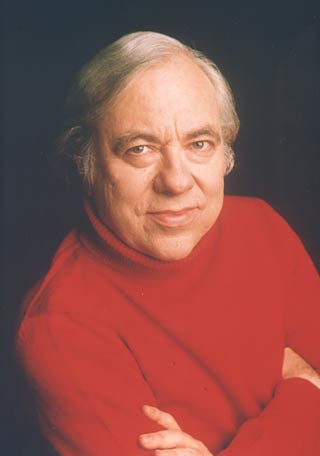 Last night, I had the priviledge of attending a concert that featured Richard Goode at the piano. Most of us have never heard of him, but I would to give an introduction to this amazing pianist.
Richard Goode was one of today's premier pianists. Born in New York, he studied the piano with such luminaries as Elvira Szigeti, Claude Frank, Nadia Reisenberg, and Rudolf Serkin. Ever since then, his career has taken him around the world. He has performed with the world's top orchestras. Some of them include: The Boston Symphony Orchestra, The Chicago Symphony, The Cleveland Orchestra, and the Vienna Symphony. He is particulary noted for his interpretations of Mozart and Beethoven, two of the greatest composers for the piano. If you would like to read more about him, please go to this website.
The program was extensive in my opinion, and it ensured that we as an audience would be able to experience a wide spectrum of music. We heard music by Bach, Mozart, Brahms, and Debussy. Before last night, I had no idea about how Richard Goode was such a great pianist. After hearing the first few notes of the Bach Suite however, I was astounded. The Bach was played with an almost effortless expression. I could hear the melody floating above the undercurrent of the other lines. To experience Bach like this gave me a new perspective on Bach. I am not the a fervent fan of Bach, but his performance gave me a second opinion on Bach's music. Next up was the Mozart. I was highly impressed with the way Goode performed this Rondo in A. Mozart's music is said to be extremely hard to play, due to the fact that you either have to be young and innocent, or you have to be old enough to feign the innocence. This quote rings true, Mozart's music is seen as innocent and almost perfect. Goode showed that actually CAN be enjoyable. I actually enjoyed listening to it, and trust me, I am not the biggest fan of Mozart's music.
Next came the Brahms Fantasien, Op.116. This piece is comprised of seven movements, three capprioco, and four intermezzos. The passion in the capprioco was astounding, the fury, the emotion, it was all there. The intermezzos were not merely "filler" pieces. The movements were movements of sublime beauty. The texture of the music was brought out. There were moments when I felt like I was in another world. (You're probably thinking, "He's such a freak". I know it's weird, but that's how I really felt!) His phrasing also inspired me. I will vow to connect the melodies together and organize my playing!
After the intermission came the set of Debussy's Preludes, Book Two. These twelve preludes are examples of program music, music that evokes actual images or has a "program to it". For example, some of the titles included: "Fireworks", "Mists", and "Canopy". The suggestive images came to life during this performance. During fireworks, the glissandos sprang from the keys with vigor and liveliness. Mists was very ambigious indeed, I felt as if I was searching my way through a mysterious land with weird key changes and ever so soft pianissimos.
The evening was one that I will cherish for a long time to come. Goode's playing gave me a new perspective on certain composers, and it also showed me the true potentials of the piano.
If you've gotten through all of this, I am really quite amazed! Thanks for your time, hope that reading this post was worth it!
Thursday, January 25, 2007
The Water Buffalo Story
In class, we were asked to watch the Water Buffalo Story which was posted by Robert Thompson, a violinist living in Yunnan Province, China. It was a heartwarming story about how some Americans donated a water buffalo to a family. This family had endured many hardships, and the gift was overwhelming to them. I've been asked to juxtapose this video and the Singer Essay.
Let me start by saying that the video and the essay both dealt with the problem of world hunger, in different ways. The video showed us how the buffalo would be able to solve their poverty problem for at least a year. The essay proposed a solution to World hunger, one I did not agree with.
The video actually showed us how world poverty can be dealt with. There was nothing hypothetical about it, not just talking the talk. Robert Thomspon actually "walked the walk". The family's reaction was absolutely amazing. Being able to see how one water buffalo could lift a family's spirits was a rare sight. Singer's essay, however, seemed to be more aloof. Not only was the tone of the essay argumentative and distant, but it didn't have the emotional impact of the video. The essay was more complex, but doesn't mean that it is more plausible. In this case, simplicity wins.
I also have some questions to post about the Singer Essay:
Is there really a solution to World Hunger?
Does Brian Singer actually care about this problem?
Let me start by saying that the video and the essay both dealt with the problem of world hunger, in different ways. The video showed us how the buffalo would be able to solve their poverty problem for at least a year. The essay proposed a solution to World hunger, one I did not agree with.
The video actually showed us how world poverty can be dealt with. There was nothing hypothetical about it, not just talking the talk. Robert Thomspon actually "walked the walk". The family's reaction was absolutely amazing. Being able to see how one water buffalo could lift a family's spirits was a rare sight. Singer's essay, however, seemed to be more aloof. Not only was the tone of the essay argumentative and distant, but it didn't have the emotional impact of the video. The essay was more complex, but doesn't mean that it is more plausible. In this case, simplicity wins.
I also have some questions to post about the Singer Essay:
Is there really a solution to World Hunger?
Does Brian Singer actually care about this problem?
Tuesday, January 23, 2007
Response to "The Singer Solution to World Poverty"
Here's my response to this essay. Before I start, I'd like to give some background on the author. Peter Singer published this essay in The New York Times Sunday Magazine on September 5, 1999.
I feel that the Singer Solution to World Poverty was a very interesting essay. From the very beginning, Peter Singer made his view on the subject extremely clear, it was so articulated that it was almost forced. Although he backed up his argument with some valid points, I am not convinced by this solution. From what I gathered after reading this essay, Singer apparently wants every American household to donate all their money that would normally be used for luxuries. At first glance, this solution seemed to be a valid solution to the problem. After thinking about this for a while, my view on the solution changed. It is true that the only way we can live truly moral lives is to give as much as we can. However, I don't think that the solution to the problem is to give away all the extra money we have.
The solution has many flaws, I'm going to address the one overarching flaw.
1. This solution is simply unrealistic. Sure, world poverty might be temporarily stalled with all the extra money. Honestly though, would this happen in real life? Most people would probably disregard this solution and act like it never existed. Why though? There is one quote in the essay that ties in with this. "Now, evolutionary psychologists tell us that human nature just isn't sufficiently altruistic to make it plausible that many people will sacrifice so much for strangers." Exactly. If all the money went to help poverty stricken people, what would we have? This sounds selfish, but we have to take care of ourselves too. The money for necessities would keep us nourished, housed, etc, but our economy would collapse. People wouldn't have any money to spend on items that aren't necessities. (Imagine no one strolling through Ala Moana anymore!) If this happened, our lives would be directly affected. If the economy suffers, we suffer. Many people would be unemployed. Our country would cease to be the economic superpower it is today.
Let me apply example to Hawaii. If the Japanese decided to try this solution out, I would say that there wouldn't be NEARLY as many tourists in Hawaii. Our thriving economy would grind to a halt. Our state probably wouldn't be able to handle the loss of revenue. The people in Hawaii might start to suffer. This sounds weird, but in trying to end world poverty, we would be creating poverty here at home. This beckons the question, is there really a solution to world poverty? There are probably thousands upon thousands of "solutions" to it, but would they actually work? This Singer solution would never work because in trying to end world poverty, there would be the potential to create even more world poverty. It would resemble a vicious cycle, so to speak.
Even donating money might not solve the problem. Donating money only feeds people. We are not attacking the root of the problem. This is sort of like pulling weeds, except that you don't completely remove the roots. The weeds will inevitably spring up once again, and the whole process will start all over again. As for attacking the roots of the problem, I don't see how we can truly eradicate the vast majority of them. It seems too enormous of an obstacle to be effectively dealt with.
So in conclusion, I think that I've reached quite a depressing conclusion. As far as I can see, there isn't a plausible solution for World Poverty.
I feel that the Singer Solution to World Poverty was a very interesting essay. From the very beginning, Peter Singer made his view on the subject extremely clear, it was so articulated that it was almost forced. Although he backed up his argument with some valid points, I am not convinced by this solution. From what I gathered after reading this essay, Singer apparently wants every American household to donate all their money that would normally be used for luxuries. At first glance, this solution seemed to be a valid solution to the problem. After thinking about this for a while, my view on the solution changed. It is true that the only way we can live truly moral lives is to give as much as we can. However, I don't think that the solution to the problem is to give away all the extra money we have.
The solution has many flaws, I'm going to address the one overarching flaw.
1. This solution is simply unrealistic. Sure, world poverty might be temporarily stalled with all the extra money. Honestly though, would this happen in real life? Most people would probably disregard this solution and act like it never existed. Why though? There is one quote in the essay that ties in with this. "Now, evolutionary psychologists tell us that human nature just isn't sufficiently altruistic to make it plausible that many people will sacrifice so much for strangers." Exactly. If all the money went to help poverty stricken people, what would we have? This sounds selfish, but we have to take care of ourselves too. The money for necessities would keep us nourished, housed, etc, but our economy would collapse. People wouldn't have any money to spend on items that aren't necessities. (Imagine no one strolling through Ala Moana anymore!) If this happened, our lives would be directly affected. If the economy suffers, we suffer. Many people would be unemployed. Our country would cease to be the economic superpower it is today.
Let me apply example to Hawaii. If the Japanese decided to try this solution out, I would say that there wouldn't be NEARLY as many tourists in Hawaii. Our thriving economy would grind to a halt. Our state probably wouldn't be able to handle the loss of revenue. The people in Hawaii might start to suffer. This sounds weird, but in trying to end world poverty, we would be creating poverty here at home. This beckons the question, is there really a solution to world poverty? There are probably thousands upon thousands of "solutions" to it, but would they actually work? This Singer solution would never work because in trying to end world poverty, there would be the potential to create even more world poverty. It would resemble a vicious cycle, so to speak.
Even donating money might not solve the problem. Donating money only feeds people. We are not attacking the root of the problem. This is sort of like pulling weeds, except that you don't completely remove the roots. The weeds will inevitably spring up once again, and the whole process will start all over again. As for attacking the roots of the problem, I don't see how we can truly eradicate the vast majority of them. It seems too enormous of an obstacle to be effectively dealt with.
So in conclusion, I think that I've reached quite a depressing conclusion. As far as I can see, there isn't a plausible solution for World Poverty.
Sunday, January 21, 2007
Nice to meet you!
Hi! My name's Eric, and I'm a sophomore. This commonplace book is going to be a place where I try to make some sense out of this complicated world. At some point in our lives, we have those moments when we try to answer life's toughest questions. Most of the time, the answers will elude our grasp. I believe, however, that every time we try to answer these questions, we are slowly and inevitably moving towards a greater understanding of both these questions and ourselves. I'll try my best to explore these questions, knowing that I might never discover the answers.
Well, enough about that. Let me introduce myself more thoroughly! I was born and raised in Honolulu, Hawaii. I am a second generation Chinese, my parents immigrated to America in their youth. I have two favorite subjects: Math and Chinese. I enjoy math because I like working with numbers. Chinese allows me to learn more about my heritage through the language. Outside of school, I play the piano and the violin. I started the piano when I was six, and I started the violin when I was ten. Playing these instruments has led me to have a passion for music, mainly classical music. A few of my favorite composers include Haydn, Beethoven, Tchaikovsky, and Rachmaninoff. Besides classical, I also enjoy listening to the Soft Rock genre.
Thanks for Reading!
Eric
Well, enough about that. Let me introduce myself more thoroughly! I was born and raised in Honolulu, Hawaii. I am a second generation Chinese, my parents immigrated to America in their youth. I have two favorite subjects: Math and Chinese. I enjoy math because I like working with numbers. Chinese allows me to learn more about my heritage through the language. Outside of school, I play the piano and the violin. I started the piano when I was six, and I started the violin when I was ten. Playing these instruments has led me to have a passion for music, mainly classical music. A few of my favorite composers include Haydn, Beethoven, Tchaikovsky, and Rachmaninoff. Besides classical, I also enjoy listening to the Soft Rock genre.
Thanks for Reading!
Eric
Subscribe to:
Posts (Atom)
