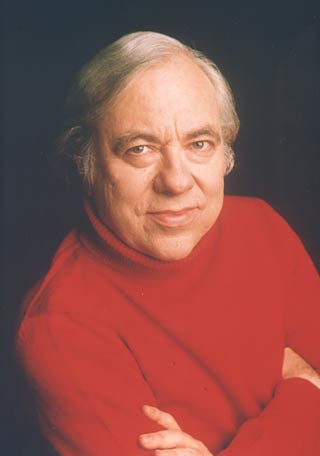
 Last night, I had the priviledge of attending a concert that featured Richard Goode at the piano. Most of us have never heard of him, but I would to give an introduction to this amazing pianist.
Richard Goode was one of today's premier pianists. Born in New York, he studied the piano with such luminaries as Elvira Szigeti, Claude Frank, Nadia Reisenberg, and Rudolf Serkin. Ever since then, his career has taken him around the world. He has performed with the world's top orchestras. Some of them include: The Boston Symphony Orchestra, The Chicago Symphony, The Cleveland Orchestra, and the Vienna Symphony. He is particulary noted for his interpretations of Mozart and Beethoven, two of the greatest composers for the piano. If you would like to read more about him, please go to this website.
The program was extensive in my opinion, and it ensured that we as an audience would be able to experience a wide spectrum of music. We heard music by Bach, Mozart, Brahms, and Debussy. Before last night, I had no idea about how Richard Goode was such a great pianist. After hearing the first few notes of the Bach Suite however, I was astounded. The Bach was played with an almost effortless expression. I could hear the melody floating above the undercurrent of the other lines. To experience Bach like this gave me a new perspective on Bach. I am not the a fervent fan of Bach, but his performance gave me a second opinion on Bach's music. Next up was the Mozart. I was highly impressed with the way Goode performed this Rondo in A. Mozart's music is said to be extremely hard to play, due to the fact that you either have to be young and innocent, or you have to be old enough to feign the innocence. This quote rings true, Mozart's music is seen as innocent and almost perfect. Goode showed that actually CAN be enjoyable. I actually enjoyed listening to it, and trust me, I am not the biggest fan of Mozart's music.
Next came the Brahms Fantasien, Op.116. This piece is comprised of seven movements, three capprioco, and four intermezzos. The passion in the capprioco was astounding, the fury, the emotion, it was all there. The intermezzos were not merely "filler" pieces. The movements were movements of sublime beauty. The texture of the music was brought out. There were moments when I felt like I was in another world. (You're probably thinking, "He's such a freak". I know it's weird, but that's how I really felt!) His phrasing also inspired me. I will vow to connect the melodies together and organize my playing!
After the intermission came the set of Debussy's Preludes, Book Two. These twelve preludes are examples of program music, music that evokes actual images or has a "program to it". For example, some of the titles included: "Fireworks", "Mists", and "Canopy". The suggestive images came to life during this performance. During fireworks, the glissandos sprang from the keys with vigor and liveliness. Mists was very ambigious indeed, I felt as if I was searching my way through a mysterious land with weird key changes and ever so soft pianissimos.
The evening was one that I will cherish for a long time to come. Goode's playing gave me a new perspective on certain composers, and it also showed me the true potentials of the piano.
If you've gotten through all of this, I am really quite amazed! Thanks for your time, hope that reading this post was worth it!


1 comment:
Post a Comment